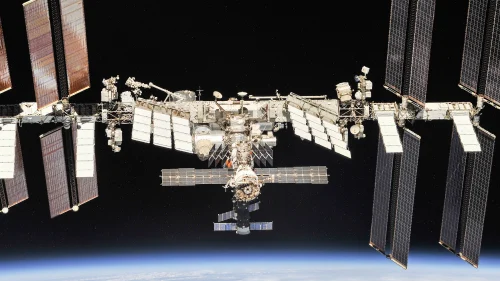
25 judges from the Raspberry Pi Foundation and ESA Education evaluated hundreds of entries from schools across Europe. 486 teams will move on to phase 2 of Mission Space Lab. The number of teams was higher than ever. As the execution time for experiments on board the ISS is limited, the number of Astro Pi projects that can go all the way to the end of the project is also constrained, particularly for the Life on Earth experiments, which require observation time in the Columbus module window.
Selection of projects for phase 2
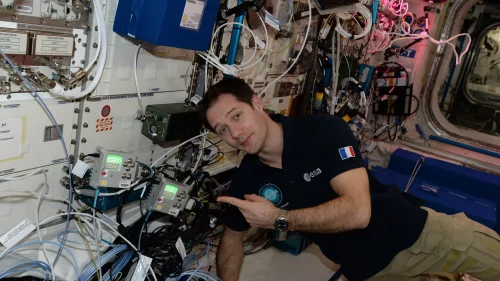
All selected teams will receive a special Astro Pi hardware kit, adapted to their experiment idea, to help them write the programs. Once the teams have received their kits, they will be able to familiarize themselves with the Astro Pi hardware, then create and test (and re-test!) their code before submitting it to move on to phase 3 if they are declared suitable for flight aboard the ISS between April and May 2023!
The deadline for teams to submit the code for their experiments is Thursday, February 24, 2023. Each submission will go through rigorous verification and testing before being accepted for phase 3.
Don’t forget Mission Zero 2022-23
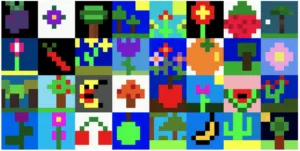
Students up to the age of 19 can also take part in Mission Zero. Teams can write a program to display a customized image (or series of photos) on an Astro Pi computer aboard the ISS, using a reading from the Astro Pi’s color and brightness sensor. Registration for Mission Zero 2022-23 is open until March 17, 2023.
To find out more, visit the Astro Pi project page