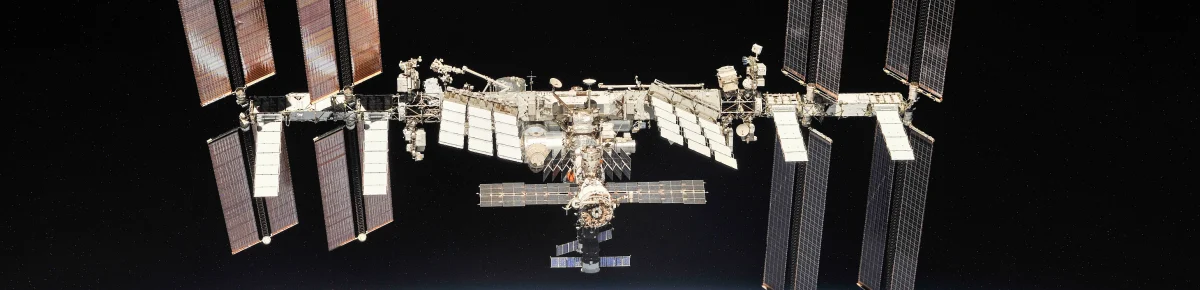
Since 2015, Raspberry Pi computers have been on board the International Space Station (ISS), the first ones having been installed by astronaut Tim Peake. As part of the Astro Pi project, they enable students to conduct scientific research in space by writing short computer programs that can be run on these computers aboard the ISS.
ProjetMission Space Lab
TargetUp to 19 years old
PeriodFrom September 14, 2026 to February 22, 2027
Learn programming with this challenge, which asks you to create your own experience using sensors from Raspberry Pi computers on board the ISS!
To take part, register your teams of 2 to 6 students on challenge website and follow the steps in the guide.
In the first phase of the “Creation” project, teams write and test their program. Then, they submit it to the Astro Pi project organizers for review.
In the second phase of the “Deployment” project, teams that have achieved flight status will see their program run aboard the ISS.
To help you, you can test the Spaceblock tool: the Astro Pi emulator for block coding, which automatically transcribes into Python.
Each student receives the results for analysis in class as well as a certificate of participation from ESA.
Project timeline
Launch of the Mission Space Lab project
To participate in the Mission Space Lab project, register on the European Space Agency website to receive updates on events organized by ESA.
–
Creation phase
Teams write and test their programs, and mentors submit their teams’ completed programs. Astro Pi Mission Control tests and assesses each submitted program.
Launch webinar
CNES, through its ESERO France office, is organising a webinar for teachers to present details of the Mission Zero and Mission Space Lab challenges, as well as the new Astro Pi resources.
–
Online conference on rover programming
In December 2026, CNES will be organising a webinar to explain how CNES experts program Martian rovers. The webinar will be presented by a CNES engineer and will be open to students in cycles 3 and 4 and at high school level.
Deadline for program submissions
To confirm your participation in the project and ensure your program is sent to the ISS, please make sure you have tested and submitted your programs before this date.
–
Deploy phase
Programs that pass testing and assessment are awarded ‘flight status’ and deployed on board the ISS.
–
National closing event
CNES will host a closing event in Toulouse in May. Classes that have submitted their code as part of the Astro Pi project will be able to attend a lecture given by a CNES specialist and take part in an activity related to astronaut training. If you would like to participate, please fill out this form!
–
Receipt of certificates
The teams receive the data collected by their program during its operation on board the ISS, as well as a certificate of participation.
–
Live with an astronaut
At the end of the project, ESA organizes an online event for all participants. This is your chance to ask questions to one of ESA’s astronauts.
Educational resources
Numerous resources are available on the ESERO France website to provide you with the best possible support for your project.
- Download available resources and activities dedicated to the Astro Pi challenge.
- Find some answers to your questions in our FAQ.
- Review the training (French) proposed by ESERO France on December 13, 2023.
- Test the Spaceblock tool: Astro Pi coding emulator that automatically transcribes code into Python.
- Discover new applications with the brand-new Astro Pi kit for the Mission Space Lab challenge.
The ESERO France team is available to support you throughout this project. If you have any questions, please do not hesitate to contact us at esero.france@cnes.fr.
We hope to see many of you again for this new season!