To give students a look behind the scenes of space exploration and help them understand its challenges, the European Space Agency (ESA) has launched the Moon Camp educational project, coordinated in France by CNES, the French space agency, as part of the ESERO educational program. The goal is to build their own space base on the celestial body of their choice using a variety of creative tools.
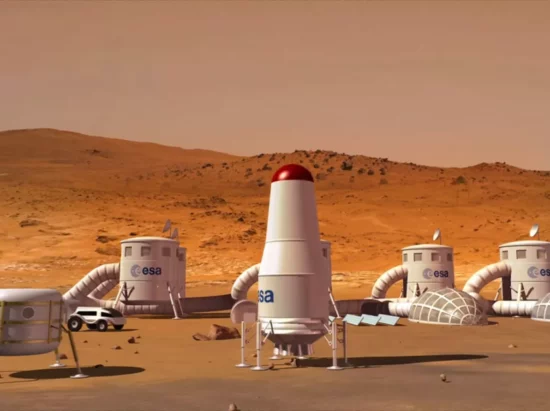
In October 2026, the Japan Aerospace Exploration Agency (JAXA), in collaboration with ESA and CNES, among others, will launch the MMX probe, whose mission will be to study Mars’ moons, Deimos and Phobos, and to bring back samples from the surface of Phobos to Earth. In this context, CNES, through its ESERO France office, has chosen “Direction Mars!” as the national theme for the 2026–2027 edition of the Moon Camp project. This is an opportunity to envision a space base adapted to the Martian environment.
Join the event
The “Direction Mars!” challenge will begin during the 2026 Science Festival and end on March 19, 2027. To participate, send us a detailed description and images of your projects to esero.france@cnes.fr before that date. If you wish to use AI-generated images, they must be accompanied by a space-themed model created using one of the tools provided for the Moon Camp challenge. Each team must have at least one adult supervisor; this person may serve as the supervisor for multiple teams, but the students must be different in each team.
Each participant will receive a certificate of participation. A panel of CNES experts will select the “Coup de cœur” award from among all the entries submitted by the participating teams, with a few surprises in store. In addition, the class of the selected team will be invited to visit CNES in May 2027 (please note that travel, transportation, and/or lodging expenses will be your responsibility). The “Coup de cœur” team will be selected based on creativity in tackling the challenge, the scientific rigor of the project’s foundation, the quality of the project, and the originality of the team name. The results will be announced on March 31, 2027, via email and on the ESERO France website.
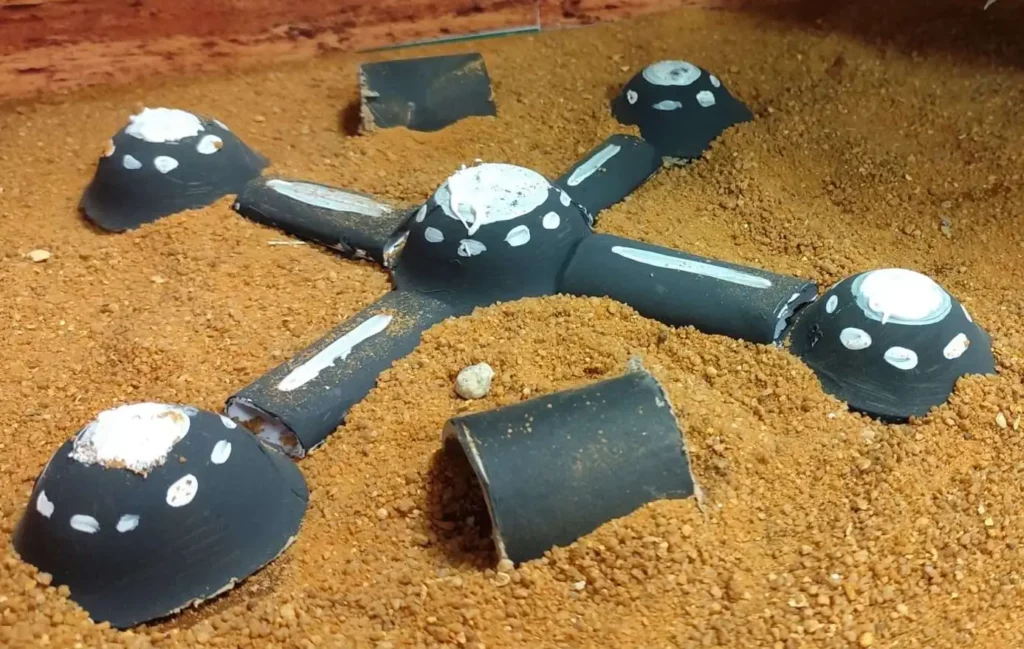
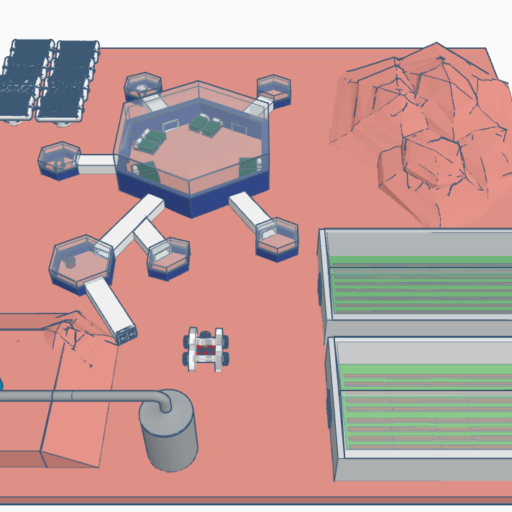
If there are multiple space base projects in a class, we invite you to select the Mars base project that, in your opinion, seems the most complete and that will represent the entire class. It is also possible to divide the students into small groups, each of which will work independently on a part of the base (greenhouse, rover, solar panels, etc.). All of these components will then be assembled to form your complete Martian base. In addition to the base representing your class, we invite you to submit all of your projects to ESA’s Moon Camp website. Each project will then be displayed alongside the work of thousands of students across Europe.
Déroulé du challenge
Challenge Launch
Start of the ‘Direction Mars’ challenge! Choose your design tools and design your own Martian base!

Submission Deadline
Your entries must be submitted to esero.france@cnes.fr before this date in order to confirm your participation. Once this is done, you may also publish your creation on the official ESA website.

“Coup de Cœur” Award Selection
A panel of experts from CNES will select the “Coup de cœur” award winner from among all the entries submitted by the participating teams, with a few surprises in store. In addition, the class of the selected team will be invited to visit CNES in May 2027.
Road to Mars
Following the first human flight around the Moon in more than 50 years in 2026, the Artemis mission aims to return to the Moon’s surface before the end of the decade. For its part, the European Space Agency (ESA) is also working on the development of a future lunar space station called “Gateway”. These various projects should, in a few years, enable astronauts to carry out long-duration missions on the Moon’s surface. This is an essential step in preparing for future crewed missions to Mars, which will be much longer and therefore much more complex.
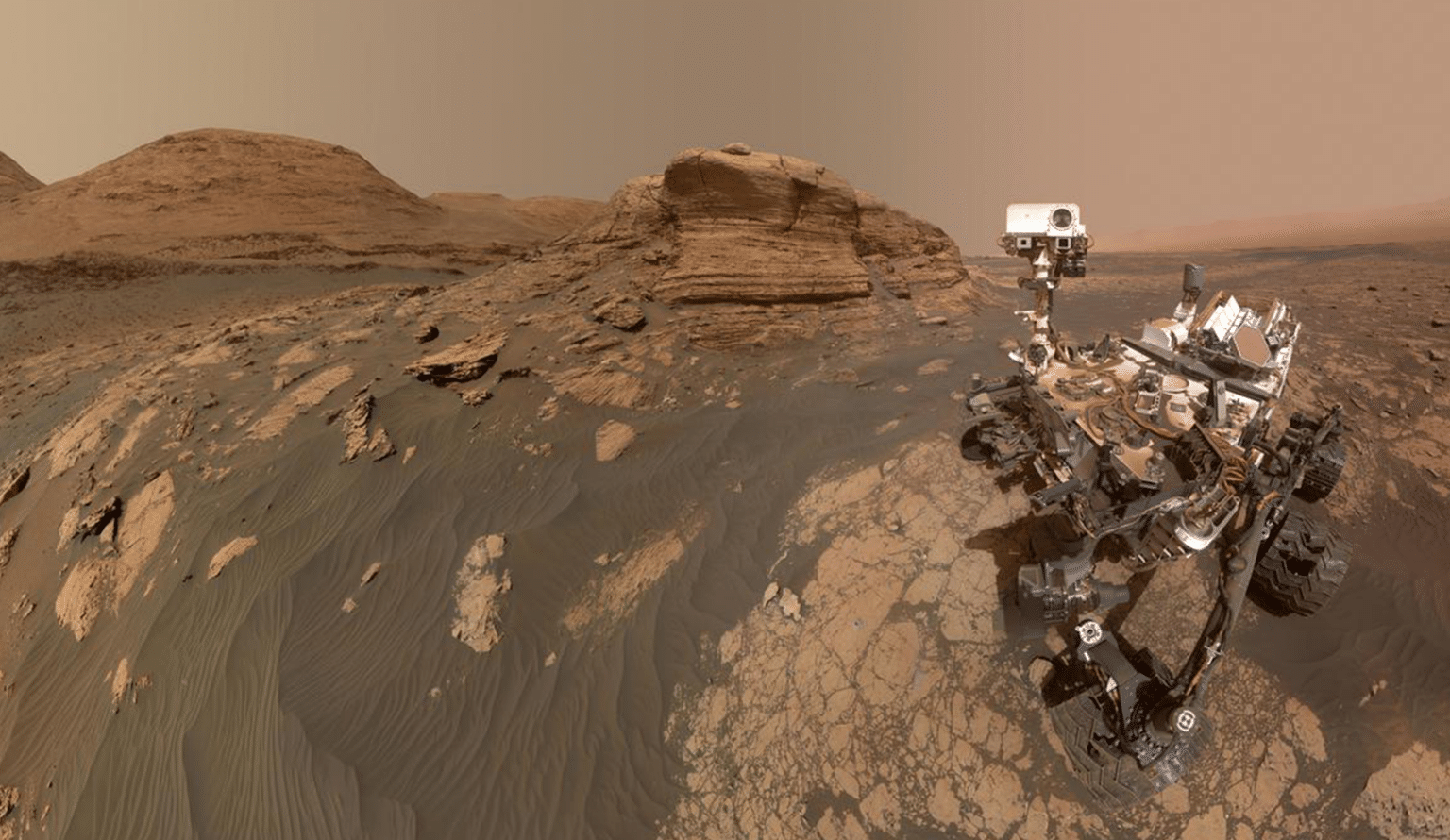
Until then, the Red Planet continues to be studied through the regular launch of satellites and rovers, mobile exploration vehicles. By the end of 2027, the Rosalind Franklin rover is expected to become the first European rover to explore the surface of Mars, alongside the U.S. rovers Curiosity and Perseverance.
In addition to missions dedicated to the planet itself, Japan’s MMX (Martian Moons Exploration) mission will launch in October 2026 to study the two Martian moons, Phobos and Deimos. One of its main objectives will be to collect samples from the surface of Phobos and bring them back to Earth for analysis. The mission will also carry the Idéfix rover, built by CNES, which will explore the surface of Phobos.
With a travel time of between 6 and 9 months, crewed missions are far more complex. Unlike lunar missions, astronauts travelling to Mars one day will have to spend several weeks on the planet’s surface. While Mars is not completely devoid of an atmosphere like the Moon, its gaseous envelope is thinner than Earth’s and is not breathable. A space base adapted to the Martian environment will therefore be essential for the astronauts’ survival.
To expand your knowledge, CNES will also offer an online conference in February 2027 on human exploration of Mars, which will be open to students in Cycle 3 and above.
We can’t wait to see your creations!