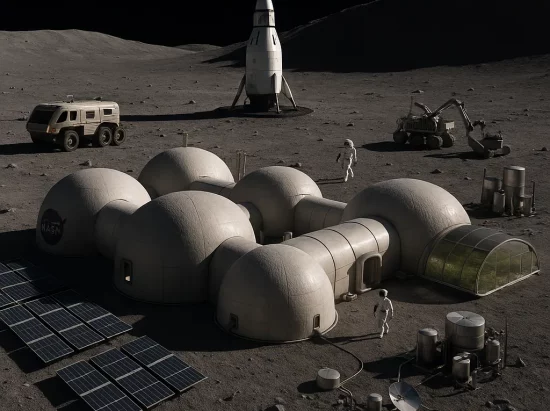
In order to give students an insight into space exploration and its constraints, the European Space Agency (ESA) has created the Moon Camp educational project, coordinated in France by the “Centre National d’Etudes Spatiales” (CNES) as part of the ESERO educational program. The aim is to create your own space base on the celestial body of your choice using various creative tools…
To coincide with the launch of the 2025 Science Festival, whose theme was “Intelligences,” CNES, via its ESERO France office, chose “Build your intelligent base” as the national theme for the Moon Camp project. This is your chance to complete the Moon Camp challenge by designing a lunar base optimized by artificial intelligence (AI). What does that mean? It’s up to you to tell us! 3D design, model, coloring—it’s up to you to create the base of tomorrow!
Take part in the event
The “Build Your Intelligent Base” challenge will begin with the inauguration of the Science Festival and will run until April 30, 2026. To participate, simply send us images of your creations to esero.france@cnes.fr before this date. Each entry must also include a detailed description of the lunar base, particularly its “smart” features. If you wish to use AI-generated images, they must necessarily accompany a space base created using one of the tools provided for the Moon Camp challenge. Each team must have at least one adult supervisor, who may be the same for several teams, but the students must be different in each team.
Each participant will receive a certificate of participation from the French Space Agency. A group of CNES specialists will select the “Coup de cœur” prize from among all the entries submitted by the participating teams, with a few surprises in store. The results will be announced in May during the Moon Camp feedback event and on the ESERO France website. The “Coup de Coeur” team will be selected based on the creativity of their approach to the challenge, the scientific rigor of their work, the quality of their production, and the originality of their team name.
Challenge program
Launch of the challenge
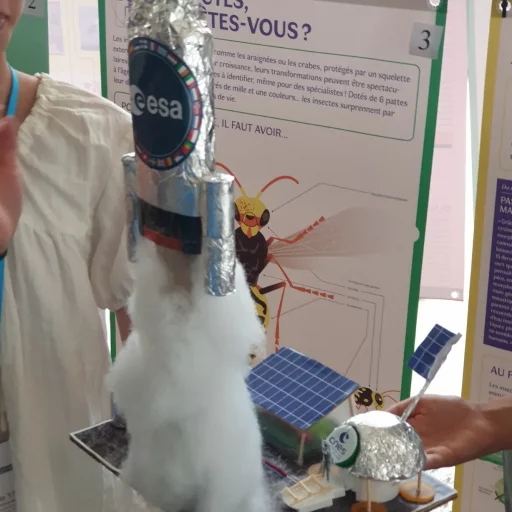
The “Build Your Intelligent Base” challenge begins. Choose your creative tools and design your own space base! You can view the complete challenge rules here.
Submission deadline
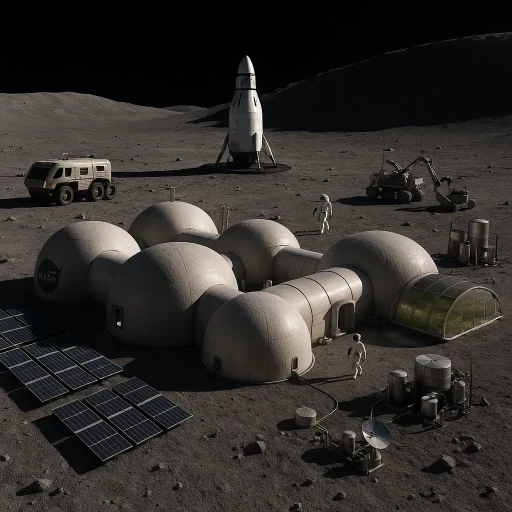
Your submissions must be sent to esero.france@cnes.fr before this date in order to validate your participation. Afterward, you can also publish your creation on the official ESA website.
“Coup de cœur” selection
The jury of CNES experts will select the favorite among all the entries submitted by the participating teams, with a few surprises in store.
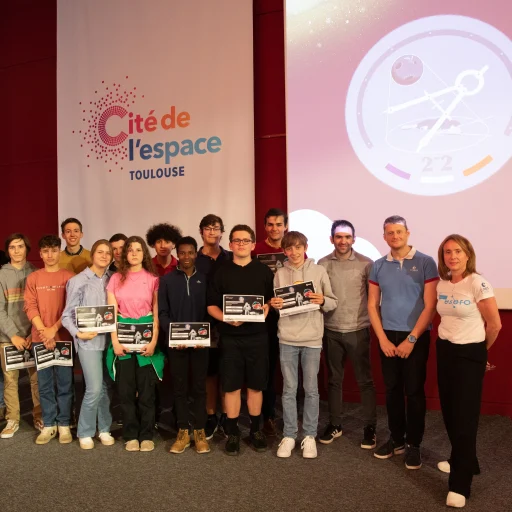
Results release
The results will be announced at the Moon Camp final event and on the ESERO France website. A certificate of participation will be sent by CNES to each participant.
Building a lunar base using AI
To match the theme of this new Science Festival, we challenge you to create a lunar base related to the use of artificial intelligence. What does this mean? Tell us!
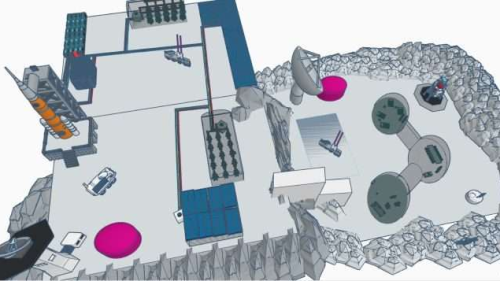
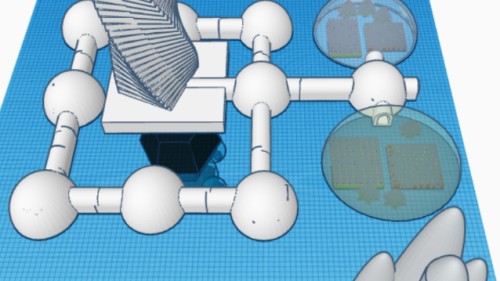
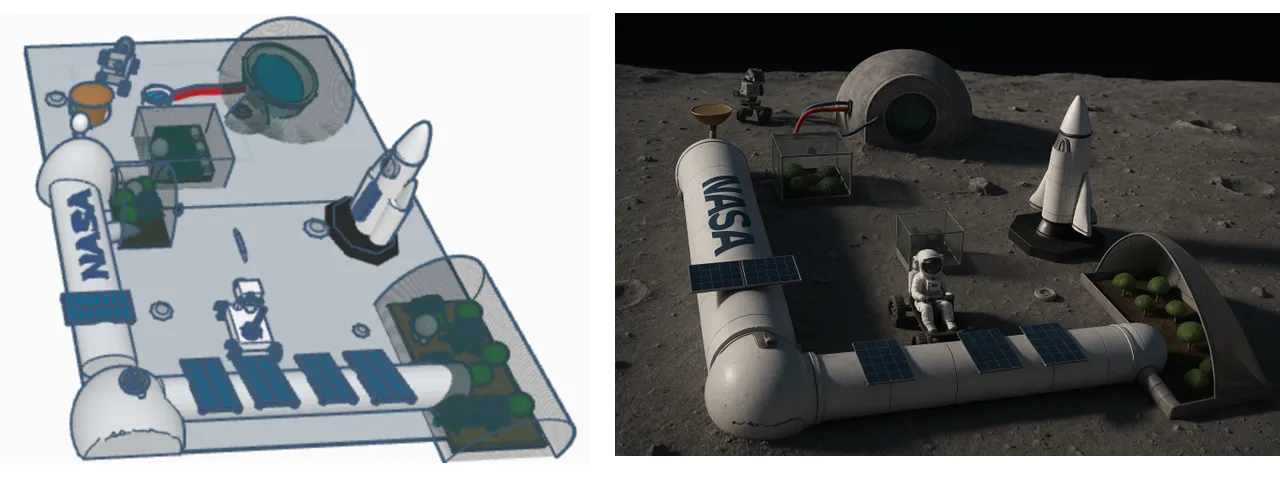
Create the space base of your choice, considering the constraints of astronauts’ lives on the Moon and how AI could make these easier (virtual assistant, intelligent rover, automatic spacecraft, etc.). To do this, you can use the tools of your choice: 3D design with Tinkercad, models made from recycled materials, drawings, etc.
Generative AI option: If you wish, you can use image generation tools to bring your creation to life. To do this, simply provide the software with an image of your base and ask it to imagine what it might look like on the Moon. You can also describe your lunar base directly, taking care to detail all its different characteristics. It is important to note that the use of generative AI is not mandatory to participate in the project. A creation using these tools will not be valued more highly than a creation based on other tools.
Life on the Moon
Space base projects seem to be getting more and more real. Especially with NASA’s Artemis project, which aims to send humans back to the Moon before the end of the decade. NASA is also working with the ESA to develop a future lunar space base called “Gateway“. These projects are very ambitious and involve new constraints, particularly in terms of the astronauts’ living conditions during these missions.
Although astronauts have been permanently present in space for over 30 years, with the International Space Station and the former Soviet MIR station, these missions will no longer take place 400 km above the Earth’s surface, but nearly 400,000 km. It is therefore necessary to develop tools to ensure the success of these lunar missions.
In this context, the use of artificial intelligence could provide significant support to astronauts. This could enable the continuous monitoring of the crew’s physical and mental health, assist with data analysis and decision-making during missions outside the base, or even enable more autonomous navigation of lunar rovers.
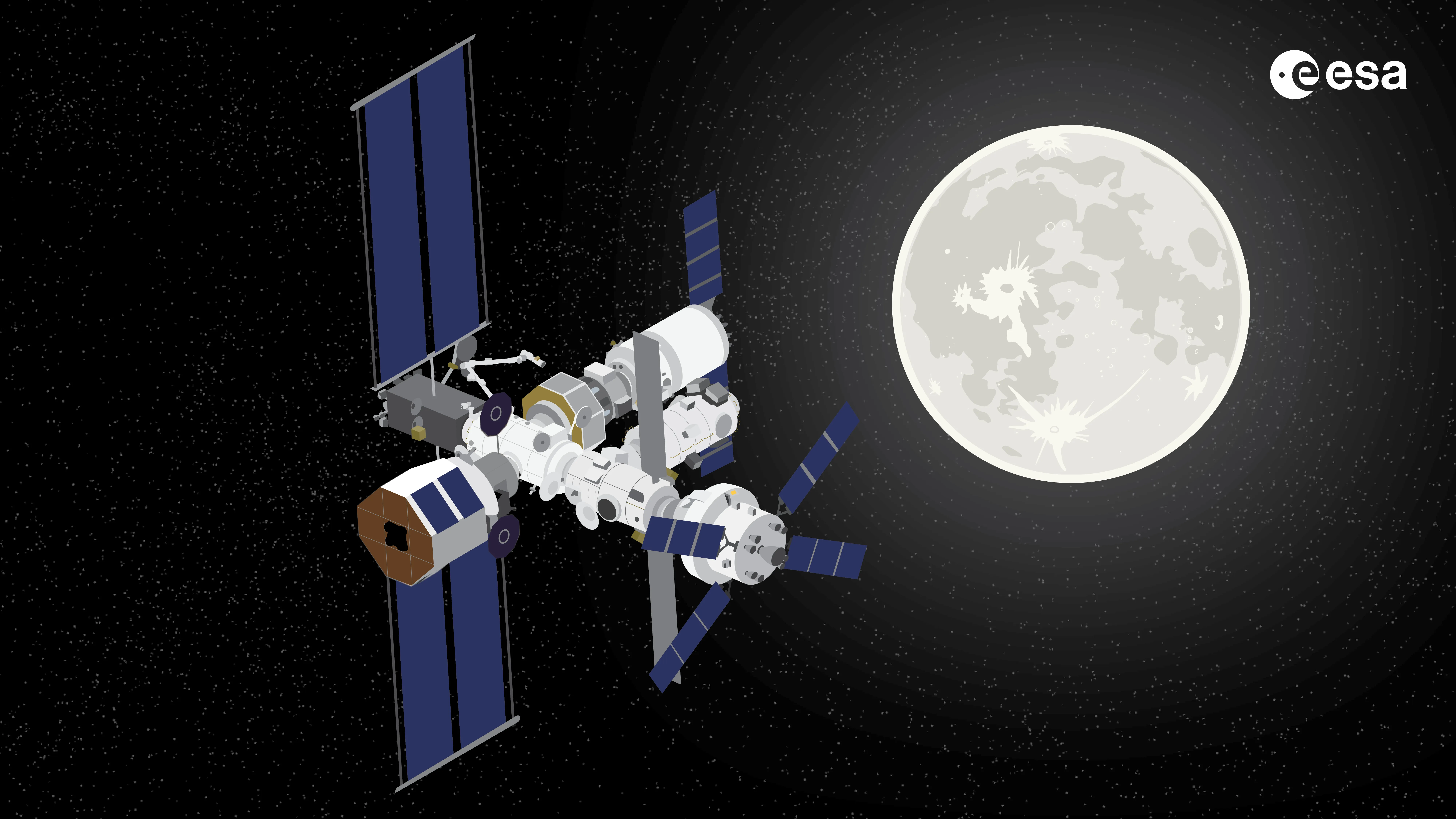
We also invite you to submit your creations on the official ESA website. Your bases will be analyzed by ESA teams and displayed alongside those of teams from across Europe.
To complete your knowledge, CNES will also offer a web conference on Thursday, February 5, 2026, from 2:00 p.m. to 3:00 p.m. entitled “L’IA au service des astronautes”, which will be accessible to students from Cycle 3 onwards.
We can’t wait to see your creations!