“To live in space for six months, as in the ISS, you need 68 tonnes of water for … one person,” explains Sébastien Barde, Deputy Director of Exploration and Human Spaceflight at CNES. This useful information has been put into practice by several hundred students from all over France, as part of an educational project carried out throughout the school year. With Moon Camp, the European Space Agency (ESA), in partnership with the Airbus Foundation and AutoDesk, is offering 6-19 year-olds the chance to take part in an international challenge divided into three categories, with the common aim of designing the lunar base of tomorrow. In class and with their teachers, this base is created using 3D modeling software.
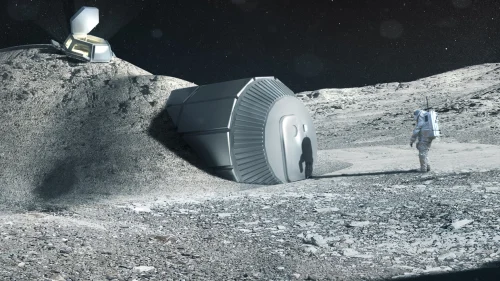
Water, oxygen, foodstuffs, the fight against space radiation, energy, and waste recycling are all factors to be taken into account when designing a Moon Camp. “Before exploring Mars, we need to return to the Moon and validate future technologies,” continues Sébastien Barde. And depending on location, the Moon can have “fourteen lunar days of night and fourteen lunar days of sun”. The other (big) unknown remains the long-term behavior of the astronauts, as a Martian mission lasts three years. Count on one year to reach the Red Planet and the same amount of time to return to Earth.
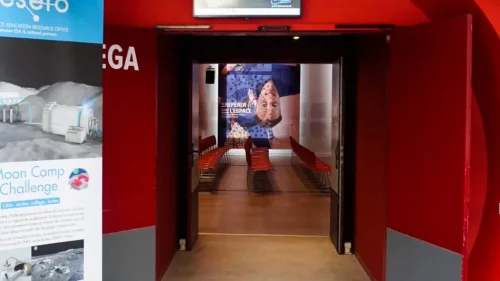
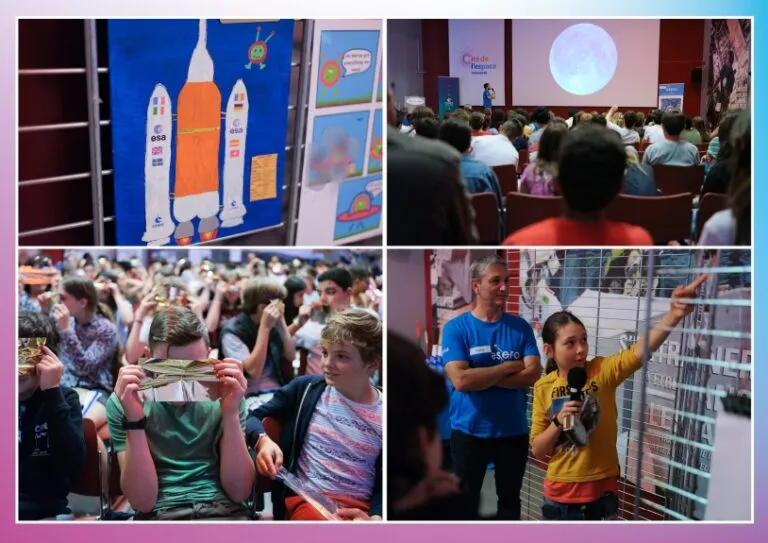
The French version of the European challenge came to an end at the Cité de l’Espace on May 30, 2023, with students from Occitanie, Tours, and Marseille taking part. Coordinated in France by CNES, Moon Camp is a first approach to space and meets the educational objectives set by the French Ministry of Education.
To find out more about the Moon Camp educational challenge, click on the project page!