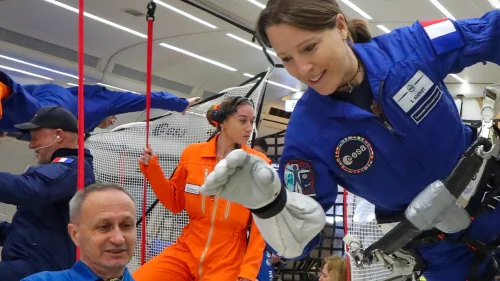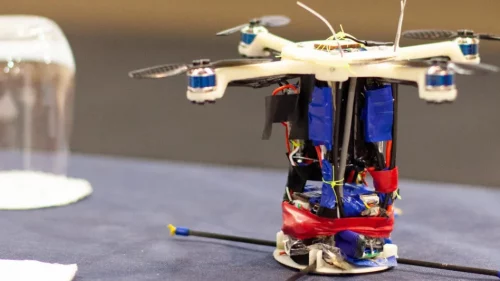
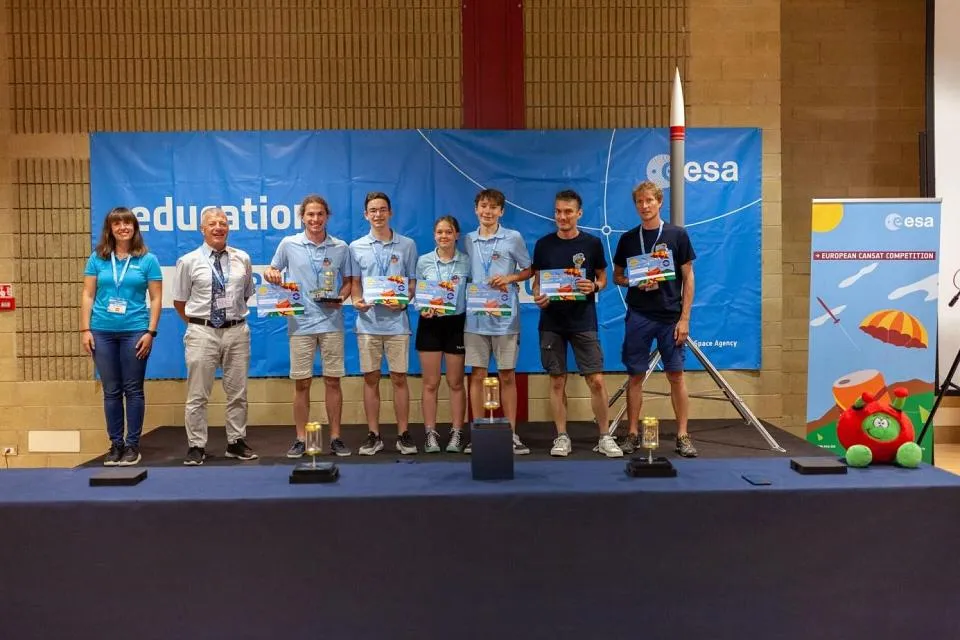
After qualifying from among the 10 teams selected for the national CanSat competition, Joris, Julia, Louis, and Ulysse won the title of “Most Professional team” at the European campaign in Bologna, Italy, with their FinderSat project simulating an exploration satellite capable of studying the environment of an exoplanet with a view to sending out a manned mission. Congratulations on a superb performance!
A satellite in a soda can
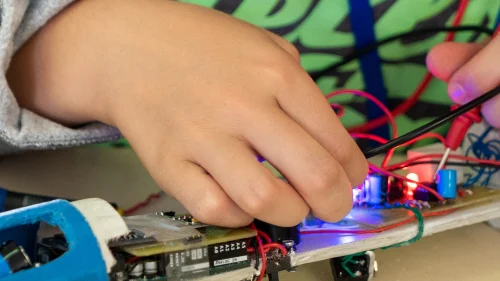
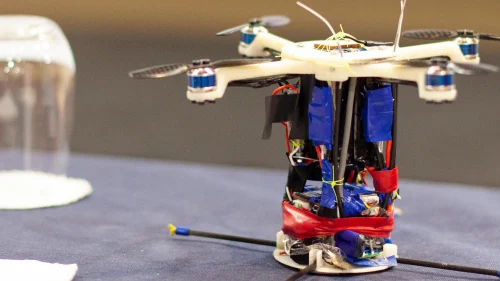
The CanSat principle is based on the idea of designing a satellite-like payload in a reduced volume, corresponding to a 33-cl soda can. This device must be capable of autonomously carrying out several scientific missions, some defined by the specifications, others by the team itself. This challenge is a realistic simulation of a program to design a lander for space exploration. Through the construction of a satellite, students develop their interest in science and the experimental approach. Future baccalaureate holders learn about the value of teamwork, good project management, and their own potential.
The project is led by ESA and coordinated in France by CNES, with operational support from its partner Planète Sciences as part of the ESERO France educational program.
To find out more, visit the CanSat project page.