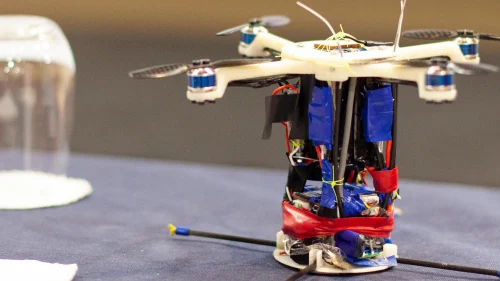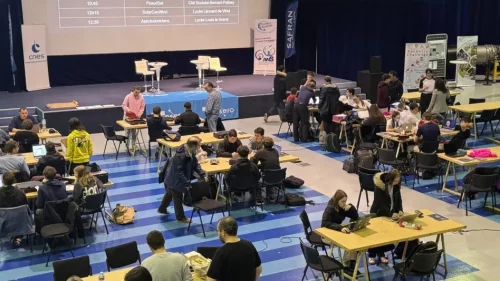
Available in France since 2021, the CanSat Lycées competition continues to attract new teams and schools. The principle of CanSat is based on the idea of designing a satellite-like payload within a small volume, corresponding to a 33 cl soda can. This system must be capable of autonomously carrying out several scientific missions, some defined by the specifications, others by the team itself.
This challenge is a realistic simulation of the process involved in designing a lander for space exploration. Through the construction of a satellite, students develop an enthusiasm for science and the experimental approach. Future high school graduates thus become aware of the value of teamwork, the importance of good project management, and their scientific and technical potential, as well as many other skills that prepare them for their future careers!
Let’s head to the Netherlands for SolarCanWin’d
After qualifying among the 10 teams selected for the final stages, organized by ESERO France, the French branch of the European Space Agency (ESA) educational program coordinated in France by CNES in partnership with Planète Sciences, the SolarCanWin’ d project from Leonard de Vinci High School (44) won first prize in the national final of the CanSat Lycées 2024 competition. This team will therefore have the opportunity to be invited by ESA to its ESTEC site in the Netherlands for the new “Space engineer for a day” learning and celebration event on June 17 and 18.
Second prize was awarded to the AstroLudoviciens project from Louis Le Grand High School (75) and third prize to the ICARE project from François Truffaut High School (65). The ST4A project from Renaudeau High School (49) won the jury’s “Coup de cœur” prize, while the PROXIMA project from Xavier Marmier High School (25) was awarded the prize for the “Pimp ton CanSat” challenge, which was held alongside the CanSat competition.
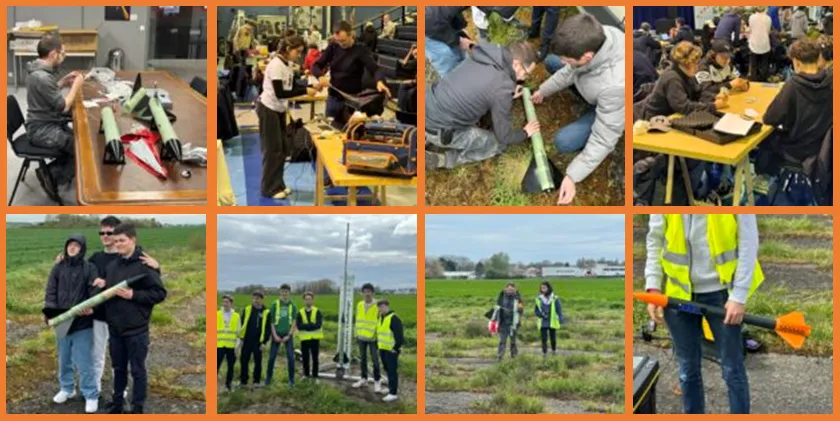
Congratulations to all the winners, but also to all the teams that participated in this CanSat educational project for the 2023-2024 school year!
For more information, visit the CanSat project page!